
What Makes Guatemalan Coffee Special? Discover Antigua, Huehuetenango and SHB by Green Ape
Guatemalan coffee has a way of tasting both familiar and surprising. One cup can feel rich and chocolatey, the next can open with orange, red fruit, warm spice, or a clean caramel sweetness.
So, what makes Guatemalan coffee special? Guatemalan coffee stands out because it grows in high mountain regions with volcanic soils, dramatic elevation changes, and many distinct microclimates. Those conditions help produce dense, flavorful beans with a wide range of tasting notes, from chocolate and caramel to citrus, fruit, and spice.
That is the short answer. The better answer is found in the country’s geography.
Guatemala is small, but its coffee regions vary wildly. Farms may sit near volcanoes, in misty highlands, in dry mountain valleys, or on steep slopes where warm days and cool nights slow the ripening of the coffee cherry. That slow development is one reason Guatemalan coffee beans can taste so layered and sweet.
For roasters like Green Ape Coffee Roasters, a small-batch coffee roaster in Lago Vista, Texas, that makes Guatemala especially rewarding. With careful roasting, a Guatemalan coffee can keep its natural character, whether it comes from Antigua, Huehuetenango, or another Strictly Hard Bean growing area.

High altitude gives Guatemalan coffee its structure
Elevation is one of the biggest reasons Guatemalan coffee tastes the way it does.
Many of Guatemala’s best coffees grow at high elevations, where cooler temperatures slow the growth cycle of the coffee cherry. Instead of ripening quickly, the fruit develops more gradually. This gives the seed inside, the coffee bean, more time to build density, sweetness, and acidity.
That is why high-altitude coffee often tastes more complex than coffee grown in hotter, lower areas. It may have:
Brighter citrus-like acidity
More concentrated sweetness
Cleaner structure
Greater aroma
A longer finish
More distinct fruit, chocolate, or spice notes
Altitude does not create quality on its own. Farming, processing, drying, storage, and roasting all matter. Still, elevation gives Guatemalan coffee a strong starting point.
This is also where the term SHB coffee comes in.
SHB means Strictly Hard Bean. In Guatemala and several other Central American countries, this term refers to coffee grown at high elevations, usually around 4,500 feet or higher. At these heights, beans mature more slowly and become harder and denser.
Dense beans can handle heat well during roasting, but they also require skill. Roast them too dark, and their regional character gets buried. Roast them with care, and the cup can show a beautiful balance of sweetness, acidity, and body.
Green Ape Coffee Roasters sources and roasts Guatemalan coffee, including Antigua and other Strictly Hard Bean coffees, with that balance in mind. The goal is not to force every coffee into the same roast profile. The goal is to bring out what the bean already has.
Volcanic soil adds depth and mineral character
Guatemala is a volcanic country, and that matters for coffee.
Volcanic soils are often rich in minerals and drain well. Coffee trees do not like sitting in waterlogged ground, so good drainage helps roots stay healthy. These soils can also support vigorous plant growth when paired with good farming practices.
In the cup, people often describe Guatemalan coffees from volcanic areas as having a deeper, rounder profile. That can show up as:
Cocoa or dark chocolate
Brown sugar
Caramel
Toasted nuts
Baking spice
A gentle mineral quality
Volcanic soil does not make every coffee taste the same. It works together with elevation, rainfall, shade, variety, and processing. Still, in regions like Antigua, volcanic influence is a major part of the cup profile.
If you enjoy coffees that feel rich without tasting flat, Guatemalan coffee is a good place to start. It often has enough body for milk drinks and enough nuance for black coffee.

Guatemala’s microclimates create many flavor profiles
One reason specialty coffee buyers keep returning to Guatemala is variety.
Guatemala has several major coffee-growing regions, each shaped by its own mix of altitude, climate, soil, and weather. Two farms in the same country can produce very different cups. Even two farms in the same region can taste different if one sits higher, gets more mist, dries coffee differently, or grows different varieties.
This is why Guatemalan coffee flavor can be hard to sum up in one sentence. It can be sweet and chocolatey. It can be bright and citrusy. It can be fruity, floral, spicy, creamy, or clean.
Here are a few common flavor directions:
Region or condition | Common cup character | What influences it |
Antigua | Chocolate, caramel, spice, balanced citrus | Volcanic soil, high elevation, dry climate |
Huehuetenango | Bright fruit, citrus, sweetness, clean acidity | Very high elevation, dry winds, remote highlands |
Atitlán | Full body, citrus, cocoa, floral notes | Lake influence, volcanic slopes, humidity |
Cobán | Soft fruit, gentle acidity, rounded body | Cloudy, rainy conditions and lush forests |
Fraijanes | Bright acidity, cocoa, spice | Volcanic soil and variable weather |
This variety is a major reason coffee lovers seek out single-origin Guatemalan coffee beans. A bag from Antigua may offer comfort and balance. A bag from Huehuetenango may feel brighter and more fruit-forward. Both are Guatemalan, but they do not taste identical.
That regional range is also why small-batch roasting matters. A careful roaster can adjust heat, development time, and roast level to fit each coffee rather than treating all beans the same.
Antigua coffee is known for balance and depth
Antigua coffee is one of Guatemala’s most famous regional coffees, and for good reason. The Antigua valley is surrounded by volcanoes and has a climate that supports slow, even coffee development. Its soils are volcanic, and its farms often sit at elevations that help produce dense, sweet beans.
In the cup, Antigua coffee often leans toward:
Chocolate
Caramel
Brown sugar
Orange or citrus
Warm spice
A smooth, rounded body
Antigua is a favorite for people who like coffee that feels classic but still has character. It can be rich without tasting heavy. It can have citrus brightness without turning sharp. It can also work beautifully as a medium roast because that roast range often preserves sweetness, body, and regional nuance.
This is one reason Green Ape Coffee Roasters features Antigua and other Guatemalan SHB coffees. Antigua offers the kind of profile that satisfies a wide range of drinkers. It is approachable for someone moving beyond grocery-store blends, but interesting enough for people who already love specialty coffee.
A well-roasted Antigua can taste excellent black, with cream, or as espresso. It has enough sweetness and body to hold up, but enough clarity to stay interesting.
Huehuetenango coffee brings brightness, fruit, and clarity
If Antigua is known for balance and volcanic depth, Huehuetenango coffee is often celebrated for brightness and complexity.
Huehuetenango sits in Guatemala’s western highlands, where coffee grows at very high elevations. The region is known for rugged terrain and unique weather patterns that help protect coffee from frost in some growing areas. This allows farms to produce high-grown coffees with lively acidity and developed sweetness.
In the cup, Huehuetenango coffees often show:
Citrus
Red fruit
Stone fruit
Honey
Caramel
Floral hints
Crisp, clean acidity
This profile makes Huehuetenango especially appealing for pour-over drinkers. Manual brewing can highlight the coffee’s clarity and fruit notes. A lighter or medium roast can let those flavors shine without covering them under roast-heavy bitterness.
That said, Huehuetenango is not only for pour-over. When roasted with care, it can also make a lively espresso or a refreshing cold brew. The key is matching the roast and brew method to the coffee’s natural strengths.

How region and elevation influence flavor
Coffee flavor is never caused by one factor alone. Region and elevation work together with soil, variety, processing, and roasting. Still, they provide a useful guide.
Higher elevations usually mean cooler nights and slower ripening. This often leads to denser beans with brighter acidity and more concentrated sweetness. Lower or warmer areas may produce softer, less acidic coffees, though good farming can still create quality.
Regional climate also changes the result.
A dry, sunny region can support even drying after harvest, which helps protect clean flavors. A humid region may create softer fruit tones but requires careful drying to avoid defects. Volcanic slopes can build depth. Cloud forests can create gentler acidity. Mountain valleys can trap or release heat in ways that affect ripening.
That is why two SHB coffees can taste different. Both may be dense high-altitude coffees, but one might taste like cocoa and orange peel while another tastes like red apple and honey.
For a roaster, this is where skill matters. Green Ape Coffee Roasters roasts in small batches so each coffee can receive focused attention. Freshness and roast control help preserve the traits that make Guatemalan coffee special in the first place.
That means chocolate should taste like chocolate, not smoke. Citrus should taste bright, not sour. Body should feel smooth, not burnt or flat.
Why Guatemalan coffee works for many brew methods
One of the best things about Guatemalan coffee is its flexibility. The same origin can work well across espresso, drip coffee, pour-over, and cold brew, especially when the roast is matched to the brew style.
Espresso
Guatemalan coffee can make excellent espresso because it often has a strong backbone of chocolate, caramel, and sweetness. These flavors translate well under pressure.
A medium or medium-dark Guatemalan roast can produce espresso with:
Cocoa depth
Syrupy body
Caramel sweetness
Citrus lift
A clean finish
It also pairs well with milk. In a latte or cappuccino, the chocolate and caramel notes can come through clearly.
Drip coffee
For everyday drip brewing, Guatemalan coffee offers balance. It has enough body to feel satisfying, but enough acidity to avoid tasting dull.
A well-roasted Guatemalan drip coffee can be smooth, sweet, and easy to drink. Antigua is especially strong here because its classic chocolate-caramel profile fits daily brewing so well.
Pour-over
Pour-over brings out clarity. This is where a bright Huehuetenango or other high-grown Guatemalan coffee can really show its detail.
With a careful pour-over, expect more separation between flavors. Citrus may become more defined. Fruit notes may become easier to notice. The finish may feel cleaner.
Cold brew
Guatemalan coffee also works well as cold brew because of its natural sweetness and chocolate notes. Cold brewing tends to reduce perceived acidity, so the result can taste smooth, mellow, and sweet.
A Guatemalan cold brew may show:
Milk chocolate
Caramel
Low bitterness
Subtle citrus
A rounded finish
For people who want cold brew with character, Guatemalan beans are a strong choice.
Fresh roasting helps preserve what makes the coffee unique
Great green coffee can lose its personality if it is roasted carelessly or sits too long after roasting. Freshness matters, but so does restraint.
The goal of specialty roasting is not to erase origin flavor. It is to develop sweetness, reduce harshness, and preserve the natural character of the bean.
For Guatemalan coffee, that might mean highlighting chocolate and spice in Antigua. It might mean protecting citrus and fruit in Huehuetenango. It might mean choosing a roast level that works for espresso while keeping enough brightness to avoid a flat cup.
This is where Green Ape Coffee Roasters fits naturally. As a small-batch roaster in Lago Vista, Texas, Green Ape can focus on careful roasting rather than mass production. Their approach to Guatemalan coffee, including Antigua and other Strictly Hard Bean coffees, centers on freshness, balance, and respect for the origin.
For anyone searching What Makes Guatemalan Coffee Special? | Green Ape Coffee, the answer is both agricultural and practical. Guatemala provides the altitude, soil, and microclimates. A careful roaster helps those qualities make it into the cup.
FAQ
What does Guatemalan coffee taste like?
Guatemalan coffee often tastes sweet, balanced, and complex. Common notes include chocolate, caramel, citrus, red fruit, stone fruit, nuts, and warm spice. The exact flavor depends on the region, elevation, processing, and roast.
Is Antigua coffee different from Huehuetenango coffee?
Yes. Antigua coffee is often known for chocolate, caramel, citrus, and spice with a rounded body. Huehuetenango coffee is often brighter, with more fruit, citrus, honey-like sweetness, and clean acidity.
What does SHB mean in coffee?
SHB means Strictly Hard Bean. It refers to coffee grown at high elevations, where cooler temperatures cause the beans to mature slowly and become dense. Dense SHB beans often have strong sweetness, structure, and complexity.
Is Guatemalan coffee good for espresso?
Yes. Guatemalan coffee works very well for espresso because it often has chocolate, caramel, sweetness, and body. These qualities help create a rich shot that also pairs well with milk.
Is Guatemalan coffee considered specialty coffee?
Many Guatemalan coffees qualify as specialty coffee when they are carefully grown, processed, sourced, and roasted. The country’s high elevations and distinct regions make it a major origin for high-quality specialty lots.
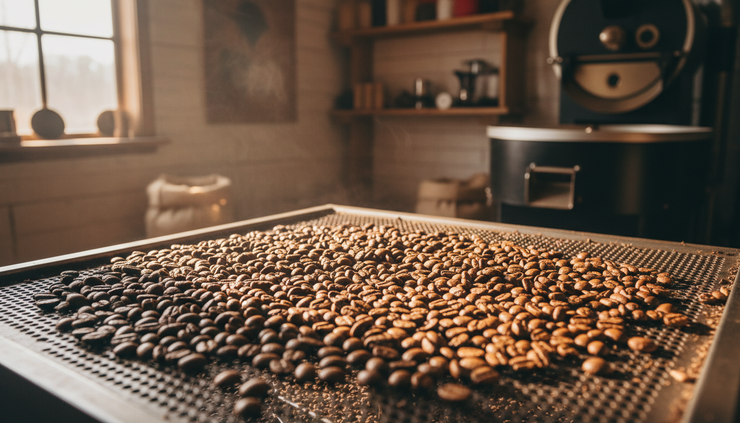
Explore Guatemalan coffee with Green Ape
Guatemalan coffee is special because place matters. High mountains slow the growing cycle. Volcanic soil adds depth. Microclimates create regional variety. Antigua brings balance, chocolate, caramel, and spice. Huehuetenango brings brightness, fruit, citrus, and clarity. SHB growing conditions add density and structure.
When those beans are roasted with care, the result is coffee with real character.
If you want to taste what Guatemala can offer, explore Green Ape Coffee Roasters’ Guatemalan coffees, including Antigua and other Strictly Hard Bean selections. Fresh roasting, thoughtful sourcing, and small-batch attention help keep the coffee’s natural qualities where they belong, in your cup.

Comments